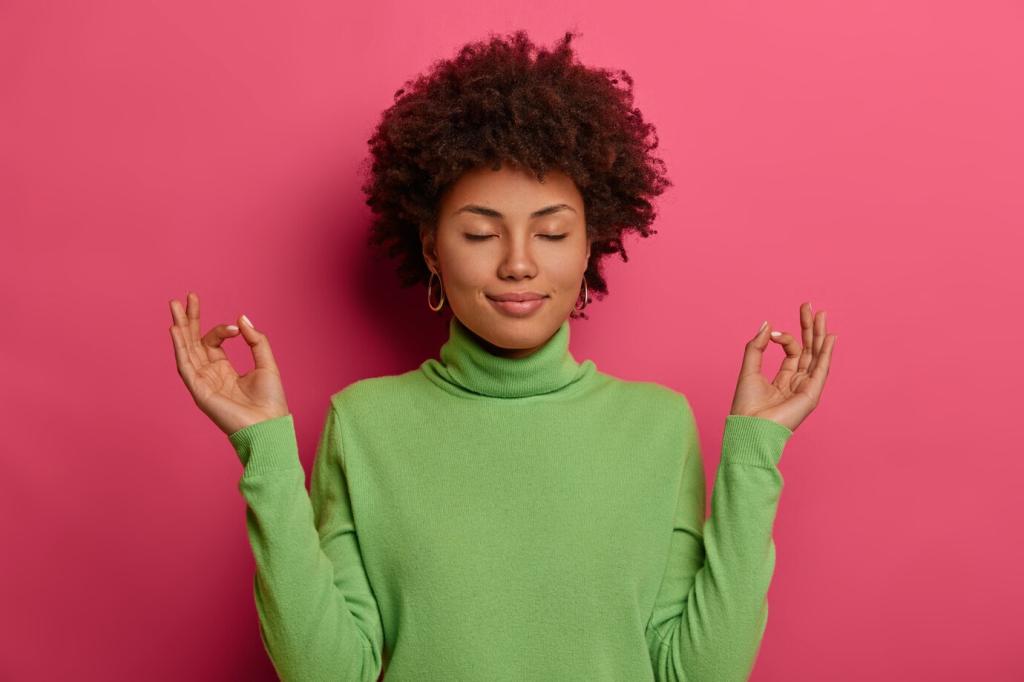
Deep Calm: How Yoga and Meditation Together Enhance Relaxation

The Breath–Body Loop

Slow, steady breathing during soft asana signals safety to the nervous system. As muscles lengthen without strain, the diaphragm moves freely, improving vagal tone and calming the heart. Meditation afterward amplifies this effect, helping your mind register the physical cues of comfort and turn them into lasting relaxation.

Brainwave Harmony After Gentle Flow

A short, mindful flow often reduces mental noise before you sit, making it easier to settle into alpha and theta patterns associated with calm attention. Meditation then stabilizes that state, helping thoughts pass like clouds. The result is less inner friction and more sustainable, embodied tranquility throughout your day.

Heart, Vagus, and the Quieting Response

Yoga’s slow exhalations and mindful movement can increase heart rate variability, a marker linked to emotional flexibility. When meditation follows, awareness widens and reactivity softens. This two-step process teaches your body to recognize peace quickly, then stay there longer. Notice the difference and share your experience with our community.

Light, Scent, and Temperature

Dim, indirect light lowers alertness just enough to relax without getting sleepy. A mild natural scent, like lavender or cedar, can prime calm. Keep a cozy layer nearby so your body doesn’t tense from chill. Experiment for a week and post which sensory adjustments made the biggest difference.

Soundscapes that Support Stillness

Silence works for some, but gentle ambient music or distant nature sounds can reduce inner chatter. Avoid melodies that tug attention. Try the same track for a week to build a soothing association. Comment with your go-to playlist or the quietest corner you’ve discovered in your home.

Props that Invite Ease

A folded blanket under the pelvis, blocks for hands, and a soft strap transform strain into release. For meditation, elevate your hips so knees drop below the belly. Comfort prolongs practice and deepens relaxation. Share your favorite prop hacks and how they changed your ability to sit peacefully.

Common Hurdles, Kind Solutions

If your mind races, shorten the session and simplify the anchor. Try five breaths per pose, then three minutes of meditation with a hand on your heart. Count exhalations, reset at ten, and celebrate any moment of awareness. Tell us which cue helped you return with kindness.
Swap deep stretches for supported shapes: figure-four on your back, reclined bound angle with blocks under knees, and gentle bridge. Move slowly, breathe wider, not harder. During meditation, recline if needed. Comfort is wisdom, not weakness. Share your favorite modifications so others with similar bodies feel welcomed.
Use micro-practices: thirty seconds of box breathing while waiting for the kettle, one minute of Cat–Cow before emails, two minutes of seated stillness after brushing teeth. Consistency beats intensity. Track tiny wins in a note on your phone and tell us what stacks naturally into your day.

Measure Progress, Deepen Engagement

After each session, jot down three words: body, breath, mood. Over time, patterns emerge, and motivation strengthens. When a tough day appears, your notes remind you that ease returns. Post a weekly summary in the comments so we can cheer your consistency and suggest supportive tweaks.

Measure Progress, Deepen Engagement

Seven days, fifteen minutes daily: five minutes of soft movement, five of breath, five of meditation. We’ll email prompts and gentle variations. Invite a friend, check in nightly, and notice what changes. Subscribe to receive the challenge guide and share your favorite moment from day three.
Go-big-bang
Privacy Overview

This website uses cookies so that we can provide you with the best user experience possible. Cookie information is stored in your browser and performs functions such as recognising you when you return to our website and helping our team to understand which sections of the website you find most interesting and useful.